
Best fit
Who should use this template
Designed for leadership roles, with a strong fit for these fields and career stages.
ExecutiveFinanceConsultingSeniorExecutive
Resume/CV template guide
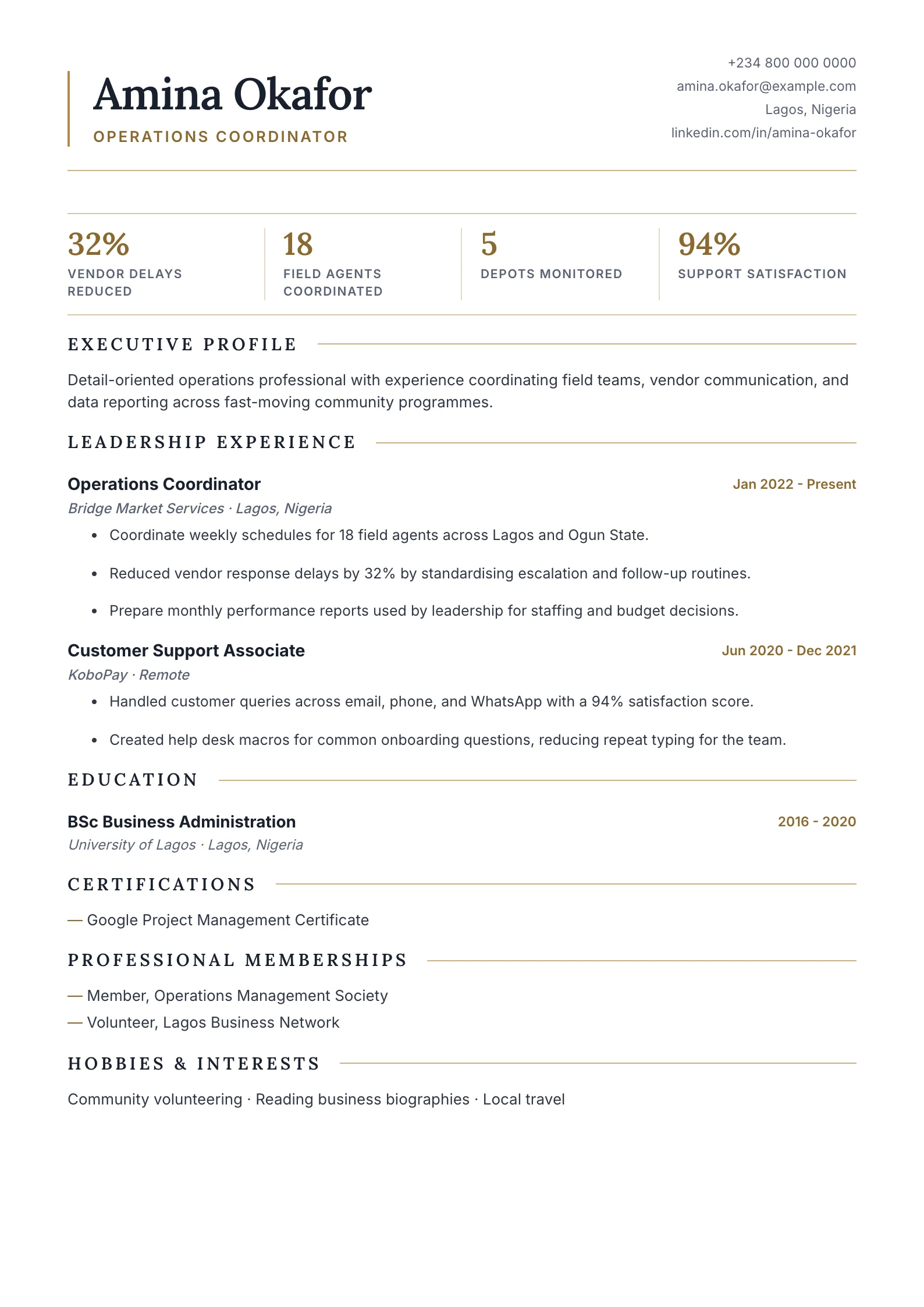
A premium executive layout with KPI metrics, leadership profile, certifications, and memberships.
Executive is designed for candidates whose value is best explained through scope, leadership decisions, and measurable organizational impact. KPI highlights create a fast overview before the reader enters the detailed career story.
Format strengths
Use this structure when its hierarchy supports the evidence you need a recruiter to notice first.
Best fit
Designed for leadership roles, with a strong fit for these fields and career stages.
Use it carefully
Detailed template analysis
Executive is designed for candidates whose value is defined by decisions, organizational scale, and sustained outcomes rather than a long list of tasks. The opening should state leadership level, functional scope, market or operating environment, and a small number of credible business results. Revenue, budget, headcount, geography, risk, transformation, and stakeholder complexity provide context when they are accurate. The page should show what the leader owned and how the organization changed, not simply that senior meetings were attended.
Each position needs a short mandate followed by selected achievements. Separate enterprise results from individual contribution: describe the decision, program, or operating mechanism the candidate led, then state the result and time frame. Board work, major transactions, turnarounds, or regulatory responsibility may deserve dedicated treatment, while early career roles can be compressed. The chronology should still make progression and tenure easy to verify.
Senior candidates often have enough material for several documents. Select evidence based on the target mandate: growth, operations, finance, technology, people, or transformation. Repeating leadership adjectives creates less value than explaining one difficult decision and its consequence. Confidential results can be expressed as ranges, percentages, business units, or relative scale without disclosing protected information. Claims should remain defensible in reference checks and interviews.
A two-page executive resume can be appropriate, but both pages need a clear purpose. Page one should establish fit and the strongest recent evidence; page two can support earlier leadership, education, governance, and relevant affiliations. Review whether the visual tone matches the organization, remove outdated personal detail, and check that every metric includes enough context to be meaningful. When the target role is hands-on rather than executive, a simpler professional format may present the candidate more accurately.
Content priorities
The visual format earns attention only when the most relevant evidence appears in the right sections.
State leadership level, functional scope, sectors, and the business outcomes you influence.
Choose a small set of defensible numbers covering revenue, cost, growth, delivery, risk, or team scale.
Show decisions, transformations, stakeholders, and outcomes rather than task lists.
How to use it
Keep the structure useful, replace every example, then test the final file as a recruiter would see it.
Keep the sections that support your target role and remove irrelevant placeholders.
Replace sample text with accurate tools, scope, achievements, education, and links.
Check hierarchy, dates, spelling, and page length before exporting PDF or DOCX.
Template FAQ
Two pages are reasonable when both pages contain recent, relevant leadership evidence. Older positions can be summarized so the strongest scope and outcomes stay visible.
Use metrics tied to decisions you influenced, such as revenue, cost reduction, portfolio size, operating scale, delivery improvement, risk, or team growth.
Use the layout as a starting point, then make every section specific to your next application.
Open the editor