
Best fit
Who should use this template
Designed for research & academia, with a strong fit for these fields and career stages.
AcademiaResearchScienceProfessionalSeniorExecutive
Resume/CV template guide
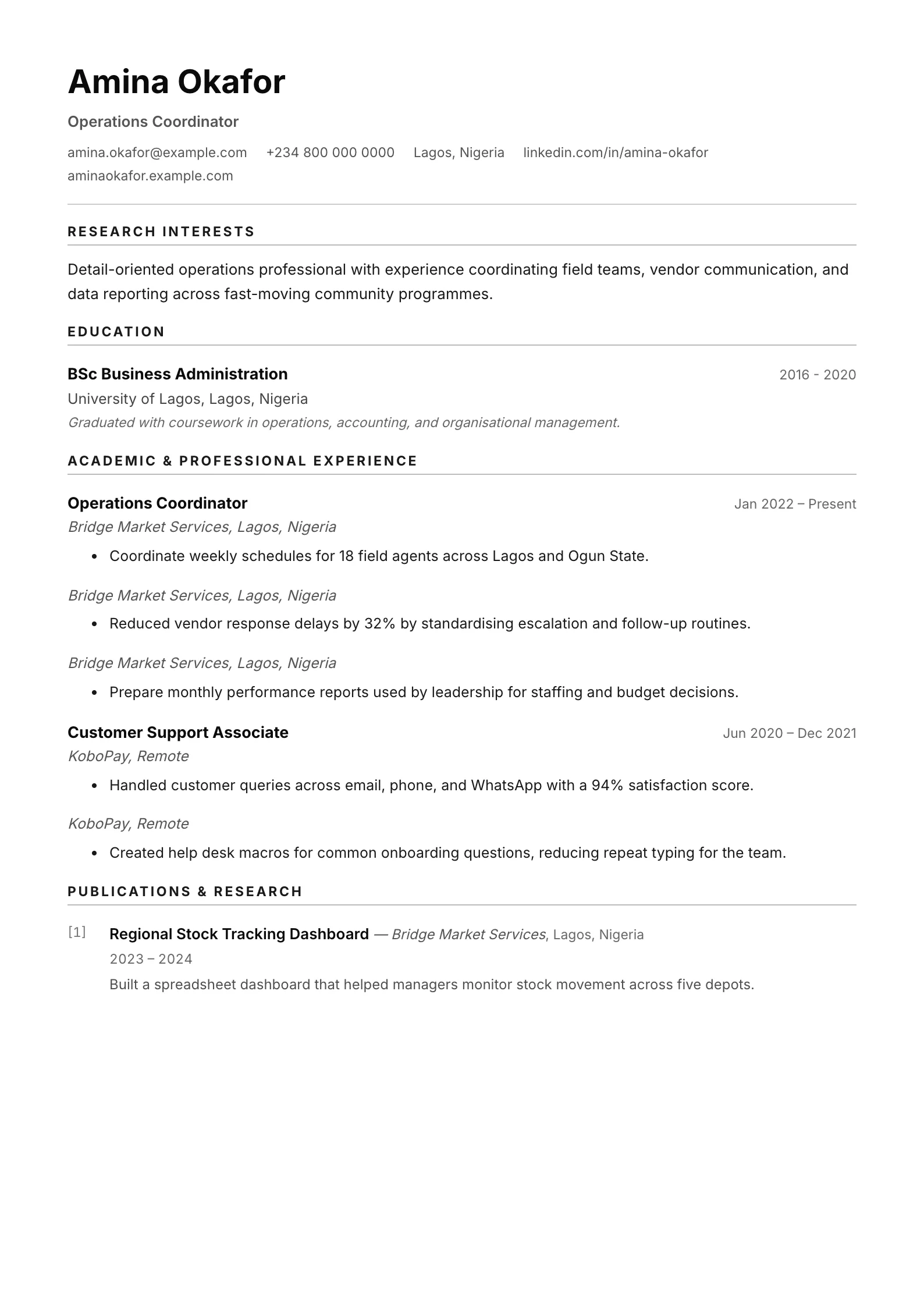
A traditional academic CV with publications, awards, affiliations, and competencies — built for researchers.
Academic is designed for evidence that does not fit a conventional one-page employment resume. Publications, teaching, research projects, awards, affiliations, and specialist competencies receive a formal long-form structure.
Format strengths
Use this structure when its hierarchy supports the evidence you need a recruiter to notice first.
Best fit
Designed for research & academia, with a strong fit for these fields and career stages.
Use it carefully
Detailed template analysis
Academic is designed for education, research, teaching, grants, publications, conferences, and professional appointments. Unlike a short private-sector resume, an academic CV may be long because the record itself is the evidence. Use clear categories, complete dates, consistent citation style, and reverse chronology within sections. The order should match the opportunity: research roles may foreground publications and methods, while teaching positions may prioritize courses, pedagogy, and student outcomes.
Distinguish peer-reviewed publications, working papers, conference presentations, invited talks, and works in progress. Identify co-authorship accurately and avoid inflating participation into leadership. Grants should state funder, role, period, and amount when disclosure is appropriate. Teaching entries can include level, course, institution, and responsibility instead of listing course titles without context.
Length does not remove the need to edit. Exclude outdated or irrelevant detail, use consistent bibliographic formatting, and create headings that let a committee find evidence quickly. A short research statement belongs in a separate document when requested; the CV should summarize interests and provide the record. For industry applications, create a separate resume rather than sending the complete academic history unchanged.
Inspect page breaks across publication and teaching lists so entries are not split confusingly. Verify DOI, profile, lab, and portfolio links, and ensure special characters render in the exported file. The Academic template should support careful review over several pages, so running headings, margins, and typography need to remain consistent. Accuracy and categorization are more important than visual novelty.
Content priorities
The visual format earns attention only when the most relevant evidence appears in the right sections.
State discipline, methods, research interests, and the questions or impact your work addresses.
Use a consistent citation style and distinguish published, accepted, and in-progress work.
Show courses, supervision, committees, outreach, and measurable educational contribution.
How to use it
Keep the structure useful, replace every example, then test the final file as a recruiter would see it.
Keep the sections that support your target role and remove irrelevant placeholders.
Replace sample text with accurate tools, scope, achievements, education, and links.
Check hierarchy, dates, spelling, and page length before exporting PDF or DOCX.
Template FAQ
Academic CVs can exceed two pages when the institution expects a complete record. Follow the application guidance and keep categories consistent and easy to navigate.
Use the citation style expected in your field and keep author names, journal details, dates, and publication status accurate.
Use the layout as a starting point, then make every section specific to your next application.
Open the editor